
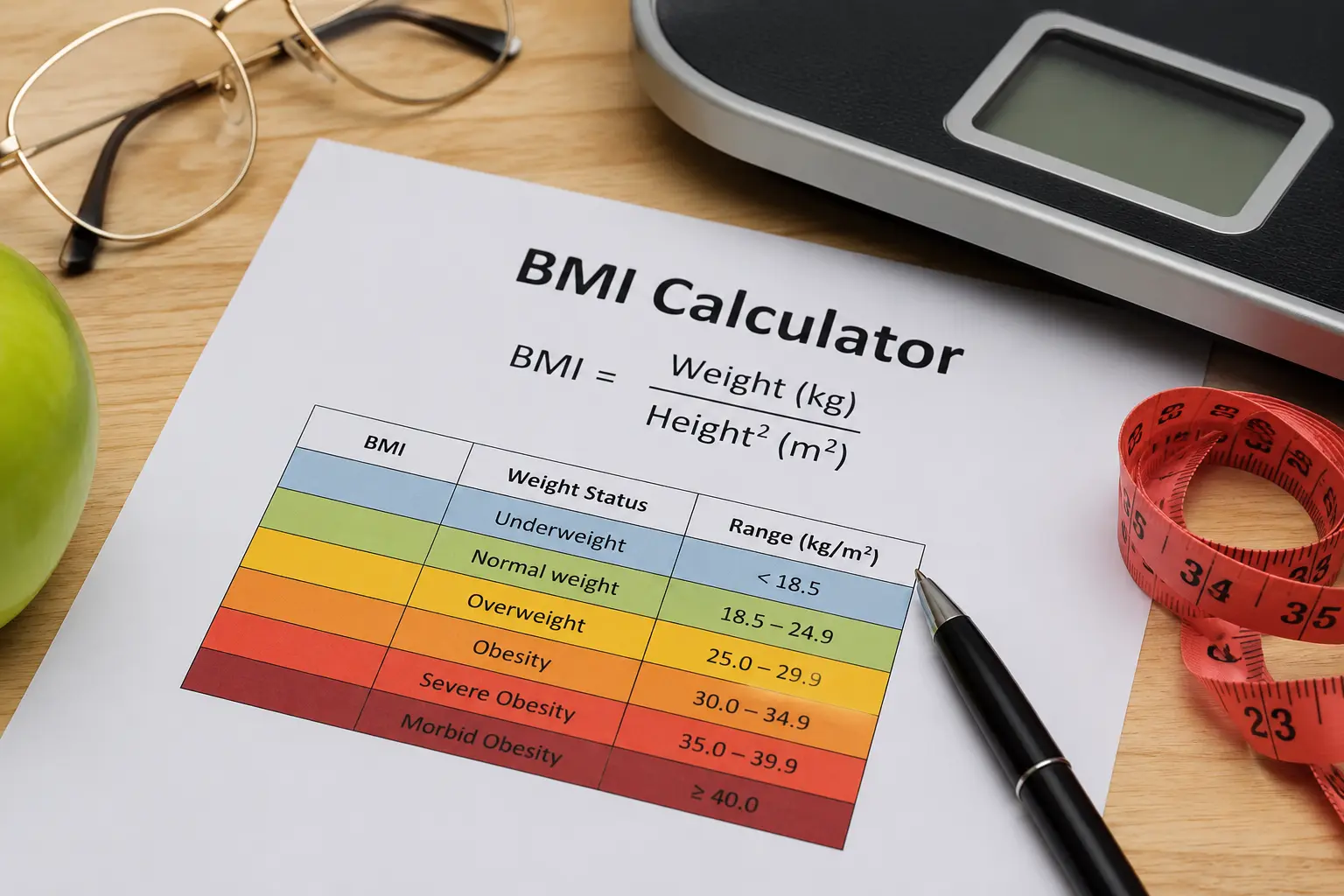
Phentermine BMI requirements generally begin with an initial body mass index of 30 or higher, or 27 or higher with at least one weight-related risk factor. However, reaching one of these BMI thresholds does not automatically mean that phentermine will be prescribed.
A licensed provider must also review your health history, current medications, blood pressure, previous weight loss efforts, possible contraindications and whether short-term phentermine treatment is medically appropriate.
Quick answer: You may meet the labeled BMI requirement for phentermine with a BMI of 30 or higher, or a BMI of 27 or higher together with a weight-related risk factor such as controlled hypertension, diabetes or high cholesterol. BMI is only the first screening step. Meeting the number does not guarantee a prescription.
Phentermine BMI Requirements at a Glance
| Initial BMI | What It Generally Means |
|---|---|
| 30 or higher | May meet the labeled BMI threshold without another weight-related condition, subject to a complete medical review |
| 27 to 29.9 | May meet the threshold only when at least one relevant weight-related risk factor is present |
| Below 27 | Usually does not meet the FDA-labeled BMI indication for phentermine |
| Any BMI with a contraindication | Treatment may be inappropriate even when the BMI threshold is met |
Important: BMI alone does not determine eligibility. A licensed provider must review your complete medical history, current medications and possible contraindications before prescribing.
The current official phentermine prescribing information describes phentermine as a short-term addition to a weight reduction plan involving caloric restriction, physical activity and behavioral changes. It lists an initial BMI of at least 30, or at least 27 with another risk factor such as controlled hypertension, diabetes or hyperlipidemia.
What Are the Basic Phentermine BMI Requirements?
Phentermine is not labeled for anyone who simply wants to lose a few pounds.
Its prescribing criteria are based partly on a person’s initial BMI and partly on the health risks associated with excess weight.
BMI of 30 or Higher
A BMI of 30 or higher falls within the adult obesity category.
A person at or above this threshold may meet the basic labeled BMI requirement without having to document another weight-related condition. The provider must still determine that the expected benefit is appropriate in relation to potential risks.
BMI of 27 or Higher With a Weight-Related Risk Factor
Someone with a BMI between 27 and 29.9 may meet the labeled threshold when another relevant risk factor is present.
The official label gives examples including:
- Controlled hypertension
- Diabetes
- Hyperlipidemia or high cholesterol
Some insurance plans and clinical policies may recognize additional obesity-related conditions, such as sleep apnea, but plan-specific criteria should not be confused with the universal prescribing label.
BMI Below 27
A BMI below 27 usually falls outside the labeled indication for phentermine.
That does not mean a person’s weight-related concerns are unimportant. It means phentermine may not be the medically appropriate or labeled option. A provider may instead discuss nutrition support, behavioral strategies, evaluation for an underlying condition or other online weight loss treatment options.
Can I Get Phentermine With a BMI of 27?
Possibly—but BMI 27 by itself is usually not enough.
At that level, a provider generally looks for at least one additional weight-related risk factor. Examples from the prescribing information include diabetes, high cholesterol and controlled hypertension.
The provider also needs to determine that:
- Phentermine is appropriate for short-term treatment
- The person does not have a listed contraindication
- Current medications do not create an unacceptable interaction risk
- Blood pressure and cardiovascular history have been considered
- The treatment will be used alongside a broader weight management plan
The final decision depends on the complete medical picture, not one BMI calculation.
Controlled vs. Uncontrolled High Blood Pressure
This is one of the most commonly misunderstood parts of the phentermine qualification criteria.
Controlled hypertension is listed as an example of a risk factor that may support eligibility when BMI is at least 27.
Uncontrolled hypertension, however, is listed among the contraindications. A history of cardiovascular disease—including coronary artery disease, stroke, arrhythmias and congestive heart failure—is also a contraindication. The label additionally advises caution even in people with mild hypertension because phentermine may increase blood pressure.
Therefore, a person should not assume that taking blood pressure medication automatically makes phentermine safe or unsafe. The provider needs to review current readings, treatment control, cardiovascular history and the medications being used.
BMI Is a Screening Measure, Not the Entire Decision
BMI is calculated from height and weight, but it does not directly measure body fat or describe a person’s full health status.
The CDC describes BMI as a screening measure that should be considered alongside factors such as medical history, health behaviors, physical examination findings, blood pressure, cholesterol and laboratory results. It is not intended to diagnose an illness or determine treatment by itself.
Two people can have the same BMI but very different:
- Cardiovascular risks
- Body composition
- Metabolic health
- Medication histories
- Weight-related conditions
- Treatment needs
- Contraindications
That is why a BMI calculator cannot replace a provider evaluation.
What Health Information Will a Provider Review?
An online or in-person provider may review much more than your height and weight.
Current Weight, Height and BMI
Accurate measurements help determine whether the labeled BMI threshold may be met.
Blood Pressure and Cardiovascular History
The provider may ask about:
- Current blood pressure readings
- Coronary artery disease
- Heart rhythm problems
- Heart failure
- Previous stroke
- Palpitations or chest symptoms
Current Medications and Supplements
A complete list is important because phentermine can interact with certain medicines.
Use during or within 14 days of a monoamine oxidase inhibitor is contraindicated because of the risk of a hypertensive crisis. Other stimulant, psychiatric, blood pressure, diabetes and weight-loss medications may also require careful review.
Thyroid and Eye Conditions
Hyperthyroidism and glaucoma are listed contraindications.
Pregnancy or Breastfeeding
Phentermine is contraindicated during pregnancy and nursing.
History of Substance Misuse
Phentermine is a Schedule IV controlled substance. A history of drug abuse is included among its contraindications, and the label warns about misuse and dependence risk.
Kidney Function
Phentermine exposure can increase with renal impairment. The current tablet label limits the maximum dosage in severe renal impairment and advises avoiding it in end-stage renal disease.
Previous Weight Loss Efforts
The provider may ask what nutrition, physical activity, behavior changes or previous treatments have already been tried.
Phentermine is intended to support a structured weight reduction plan—not replace it.
Who Should Not Take Phentermine?
Phentermine is not appropriate for everyone, even when the BMI requirement is met.
The current prescribing information lists contraindications including:
- History of cardiovascular disease
- Uncontrolled hypertension
- Use of an MAO inhibitor during the previous 14 days
- Hyperthyroidism
- Glaucoma
- Agitated states
- History of drug abuse
- Pregnancy
- Nursing
- Known hypersensitivity to sympathomimetic amines
A provider may also decide against treatment because of other health concerns, medication interactions, missing medical information or clinical judgment.
Important Safety Note
Do not hide a medical condition, lower your reported weight, increase your reported height or leave medications off the intake form to try to meet eligibility requirements.
Accurate information is necessary for a safe prescribing decision.
Clinical Eligibility Is Different From Insurance Approval
Medical eligibility and insurance coverage are not the same thing.
Medical Eligibility
The provider determines whether treatment is medically appropriate based on:
- BMI
- Weight-related risk factors
- Health history
- Contraindications
- Medication interactions
- Potential benefit and risk
Insurance or Plan Approval
An insurer may add requirements such as:
- Prior authorization
- Clinical documentation
- Participation in a weight loss program
- Use of a preferred generic product
- A specific approval duration
- Proof of treatment response for continued coverage
The Superior HealthPlan policy supplied for this review, for example, has a last review date of May 2021 and applies to specified Commercial/HIM lines. It required BMI documentation, enrollment in a reduced-calorie and increased-activity program, generic use in most circumstances and a total approval period of up to 12 weeks. These are payer-specific historical criteria, not universal 2026 prescribing rules.
A person can be medically eligible but have no insurance coverage. Another person may have coverage available but still be declined by the provider for medical reasons.
Can You Qualify Through a Telehealth Evaluation?
A telehealth provider can review the same core clinical factors that would be considered during an in-person weight management evaluation.
A phentermine telehealth eligibility review may include:
- Secure medical intake
- Height, weight and BMI
- Current medications
- Blood pressure or pulse information
- Cardiovascular history
- Previous weight loss efforts
- Contraindication screening
- Video consultation when required
- Follow-up or refill requirements
Completing the assessment does not guarantee a phentermine prescription.
To learn more about remote prescribing, read whether telehealth can prescribe phentermine and review TeleCareSpot’s Phentermine telehealth evaluation.
Want a Licensed Provider to Review Your Eligibility?
Complete a secure online medical intake and connect with a licensed U.S. provider to discuss your BMI, health history and available treatment options. A prescription is not guaranteed.
What Should You Prepare for an Online Evaluation?
Having accurate information ready can make the appointment more useful.
Prepare:
- Your current height and weight
- Recent blood pressure readings, when available
- A complete medication and supplement list
- Allergies
- Previous weight loss treatments
- Relevant medical diagnoses
- Details about pregnancy or breastfeeding
- Your preferred pharmacy
- Questions about treatment, cost and follow-up
A provider may request additional information, recent laboratory results or an in-person evaluation when clinically necessary.
Does Meeting the BMI Requirement Guarantee a Prescription?
No.
Meeting the BMI threshold only means that you may satisfy one part of the labeled indication.
A provider can still decline to prescribe phentermine because:
- A contraindication is present
- Blood pressure is not adequately controlled
- A medication interaction is concerning
- Required medical information is missing
- Another treatment is more appropriate
- The expected benefit does not justify the risk
- State or provider rules prevent treatment
- Follow-up requirements cannot be met
The prescribing decision must remain independent and medically appropriate.
What Happens After Treatment Starts?
If treatment is prescribed, follow-up care may review:
- Appetite response
- Weight trend
- Blood pressure
- Heart rate
- Side effects
- Sleep
- Continued eligibility
- Whether the broader treatment plan is being followed
Early scale changes vary. Read what phentermine results after 2 weeks may look like and why one short-term weigh-in is not the complete measure of response.
Refills should not be assumed to be automatic. The provider may require updated information before continuing treatment.
Frequently Asked Questions
What BMI Do You Need for Phentermine?
The labeled threshold is generally an initial BMI of 30 or higher, or 27 or higher with at least one relevant weight-related risk factor.
Can I Get Phentermine With a BMI of 27?
You may meet the BMI threshold if you also have a relevant condition such as controlled hypertension, diabetes or high cholesterol. A complete provider evaluation is still required.
Can I Get Phentermine With a BMI of 29 and No Health Conditions?
A BMI of 29 without another qualifying risk factor generally does not meet the labeled indication. A provider may discuss other weight management approaches.
Are Adipex BMI Requirements Different?
Adipex-P is a brand-name phentermine product. Its general BMI indication follows the same framework: BMI of at least 30, or at least 27 with another relevant risk factor.
Can I Take Phentermine With High Blood Pressure Medication?
It depends on whether your blood pressure is adequately controlled, your cardiovascular history and the medication being used. Controlled hypertension may be a qualifying risk factor, while uncontrolled hypertension is a contraindication. The provider must review this individually.
Can Diabetes Help You Qualify at BMI 27?
Diabetes is listed as an example of a weight-related risk factor that may support the BMI 27 threshold. Diabetes medications may require adjustment during weight loss, so provider monitoring is important.
Who Is Not a Good Candidate for Phentermine?
People with certain cardiovascular conditions, uncontrolled hypertension, hyperthyroidism, glaucoma, recent MAOI use, pregnancy, nursing, agitation, drug-abuse history or relevant hypersensitivity should not take it according to the prescribing information.
Do You Need Laboratory Tests Before Receiving Phentermine?
Not every patient requires the same testing. A provider may request laboratory results or additional evaluation based on medical history, current medications, symptoms and risk factors.
Can an Online Doctor Determine Whether I Qualify?
A properly licensed provider may assess eligibility through telehealth when applicable requirements are met. An online questionnaire by itself should not be treated as guaranteed approval.
Is BMI the Only Phentermine Qualification Criterion?
No. BMI is only one factor. Health history, medications, blood pressure, contraindications, treatment goals and provider judgment also matter.
Have more questions about treatment eligibility, medications and online care? Explore our weight loss FAQs.
Phentermine BMI Requirements: Key Takeaway
Phentermine BMI requirements generally begin at an initial BMI of 30, or 27 with a weight-related risk factor.
However, BMI is a screening threshold—not an approval guarantee.
The provider must also review cardiovascular health, blood pressure, current medicines, thyroid and eye conditions, pregnancy status, substance-use history and other safety factors before determining whether phentermine is appropriate.
Explore TeleCareSpot’s Phentermine telehealth evaluation, learn whether telehealth can prescribe phentermine, or review other online weight loss treatment options before beginning your secure medical intake.
Note: This article is for educational purposes only and does not replace medical advice, diagnosis or treatment. Medication eligibility and prescribing decisions must be made by a qualified healthcare provider.